Guide · Chapter 6
The trail underneath
Every figure in the product is an aggregate of these four screens. When somebody asks where a number came from, this is the answer.
People trust automatic tracking when they can take it apart. If a total cannot be broken down, it will not be believed.
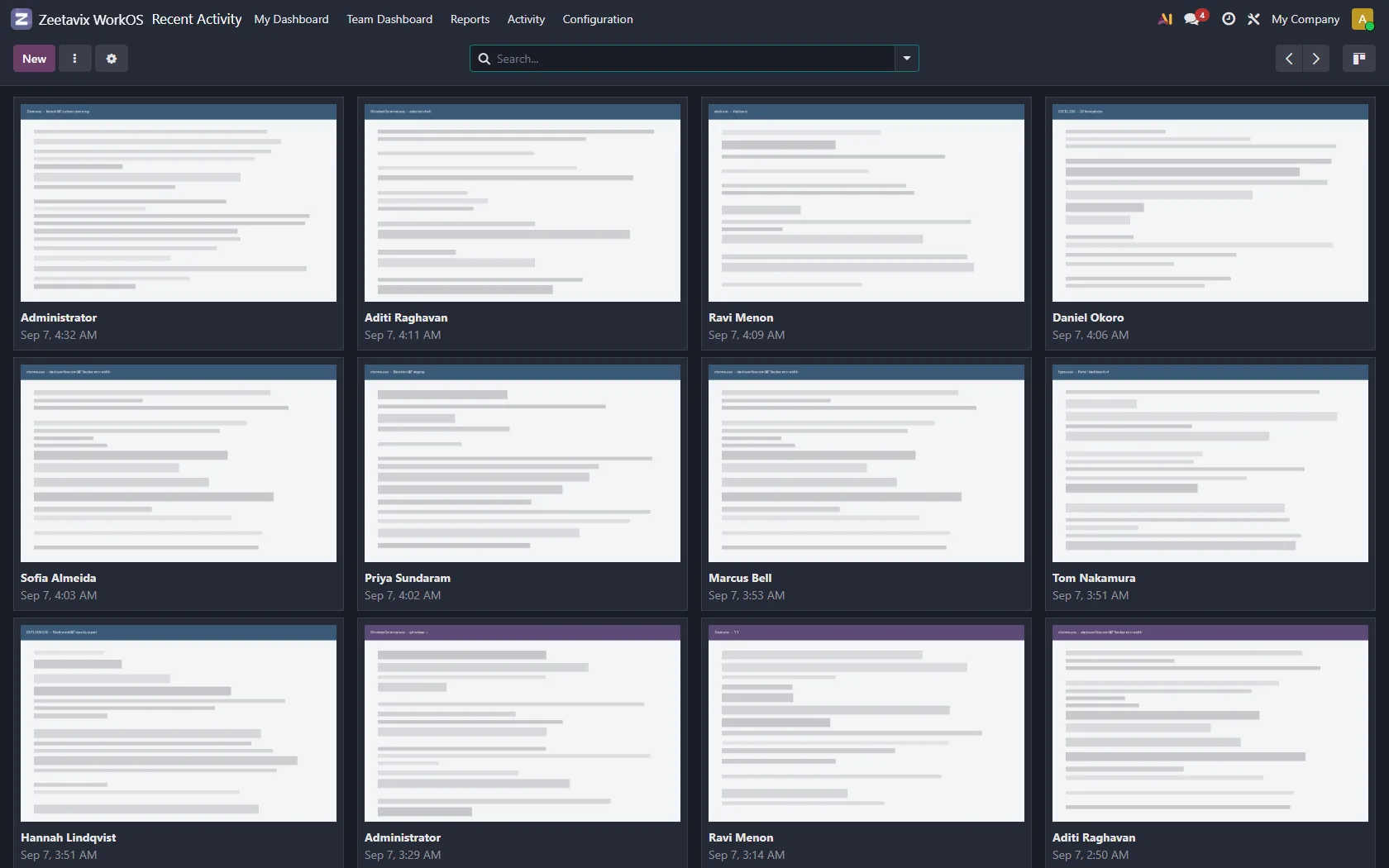
Recent Activity — the raw feed
Every event as it arrived: which machine, which person, what type, when. Timer starts and stops, activity samples, active windows, screenshots, and the agent’s own bookkeeping.
Nobody reads this daily. You read it the day something looks wrong, and on that day it is the only screen that matters.
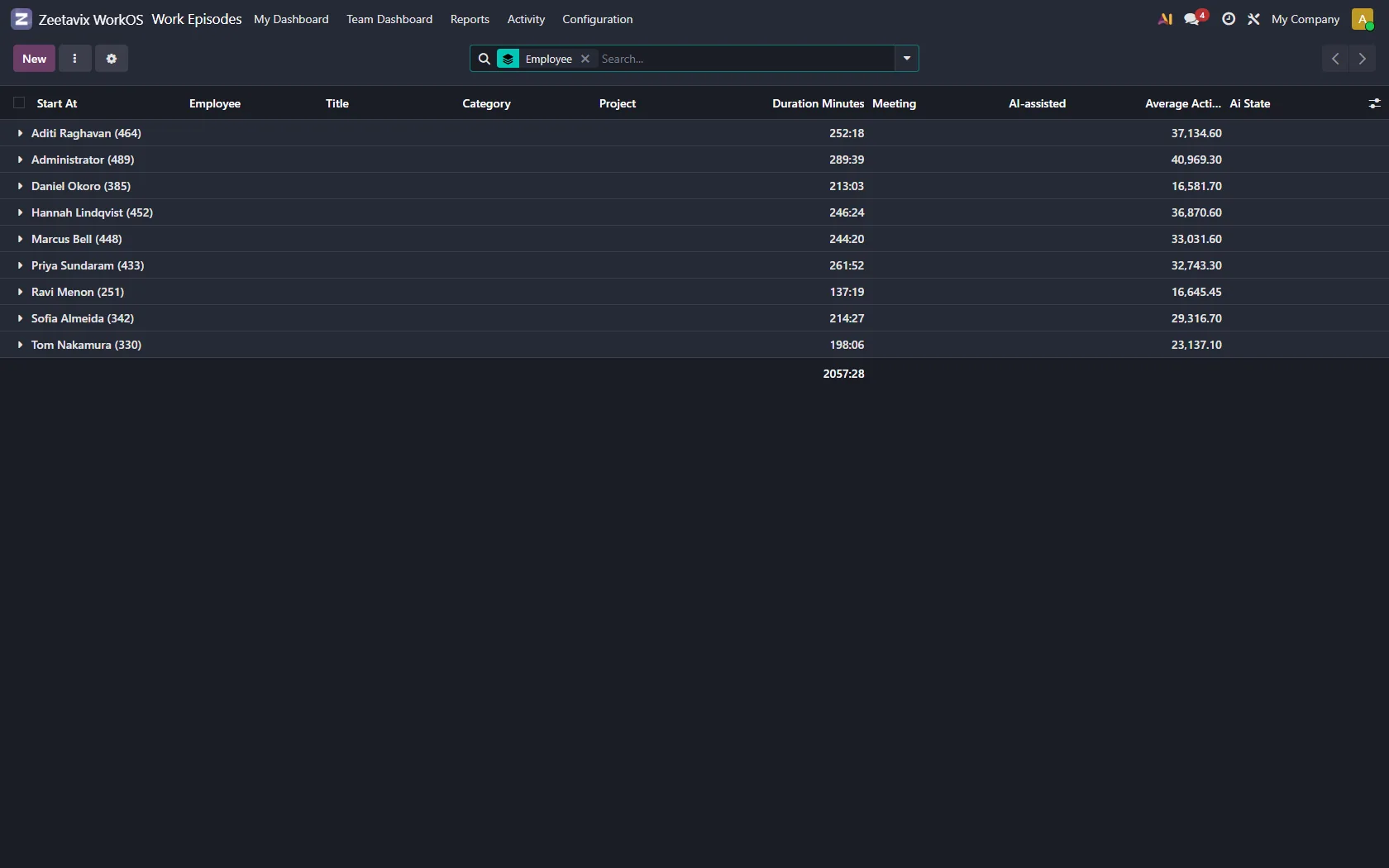
Work Episodes — raw events, made into something readable
A day produces thousands of samples. An episode is a run of them that belongs together: one application, one project, one continuous stretch of attention, with a start, an end and a measure of how engaged it was.
Episodes are why the raw samples can be deleted on a retention schedule while every report keeps answering. They are also what the AI summaries are written from — a model reads episodes, never keystrokes and never screen contents.
The builder deletes and rebuilds the day it is given, so a late-arriving sync produces the same answer as if everything had arrived on time. Episodes are derived data; rebuilding them is always safe.
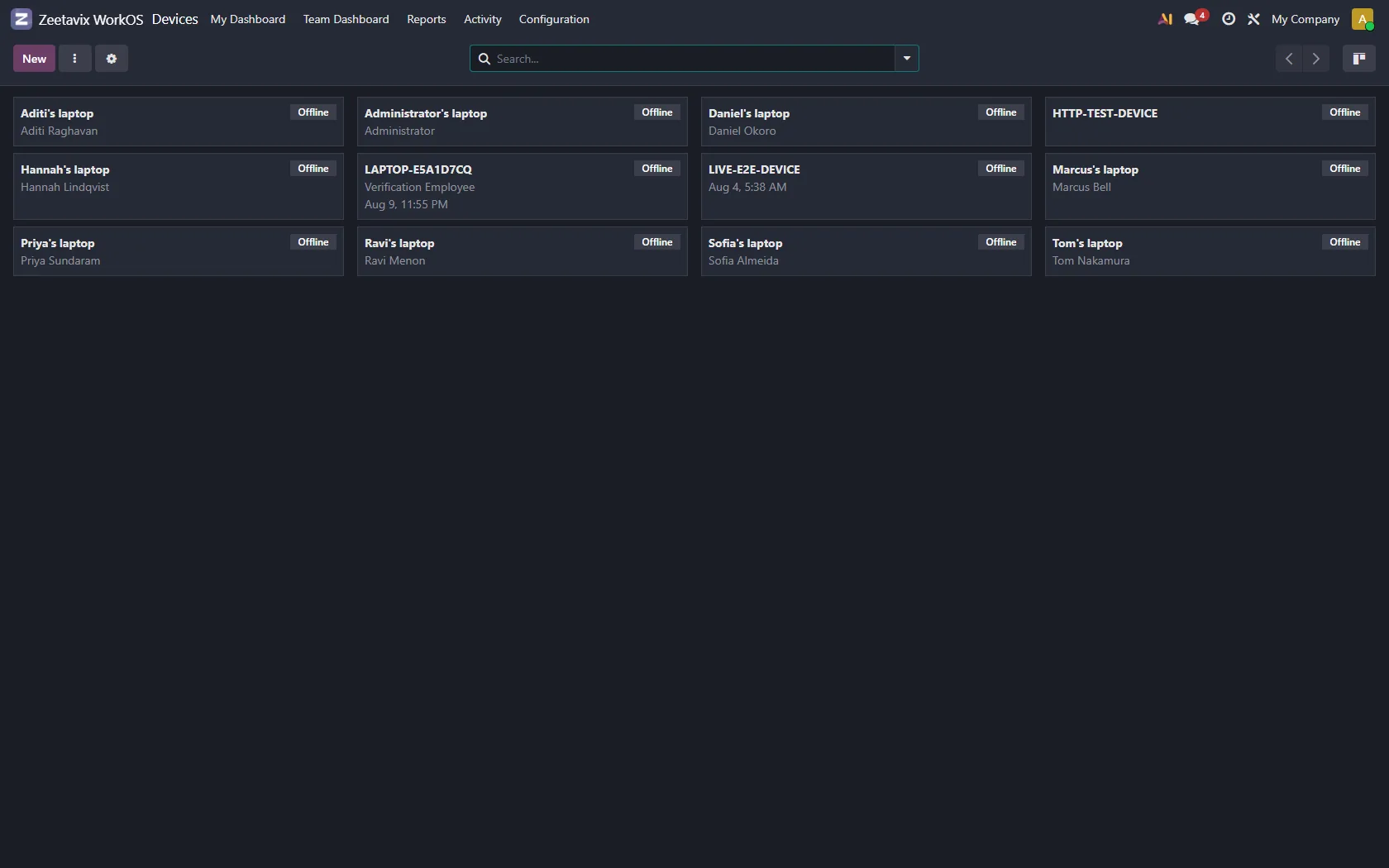
Devices — what is paired, and what is talking
One row per machine: who it belongs to, when it last synced, whether it is currently reachable. Pairing happens once, in the browser, and a device cannot be moved to another company afterwards.
The “last seen” column is a support question, not an attendance one. It tells you whether their agent is running. That is not the same as whether they are working.
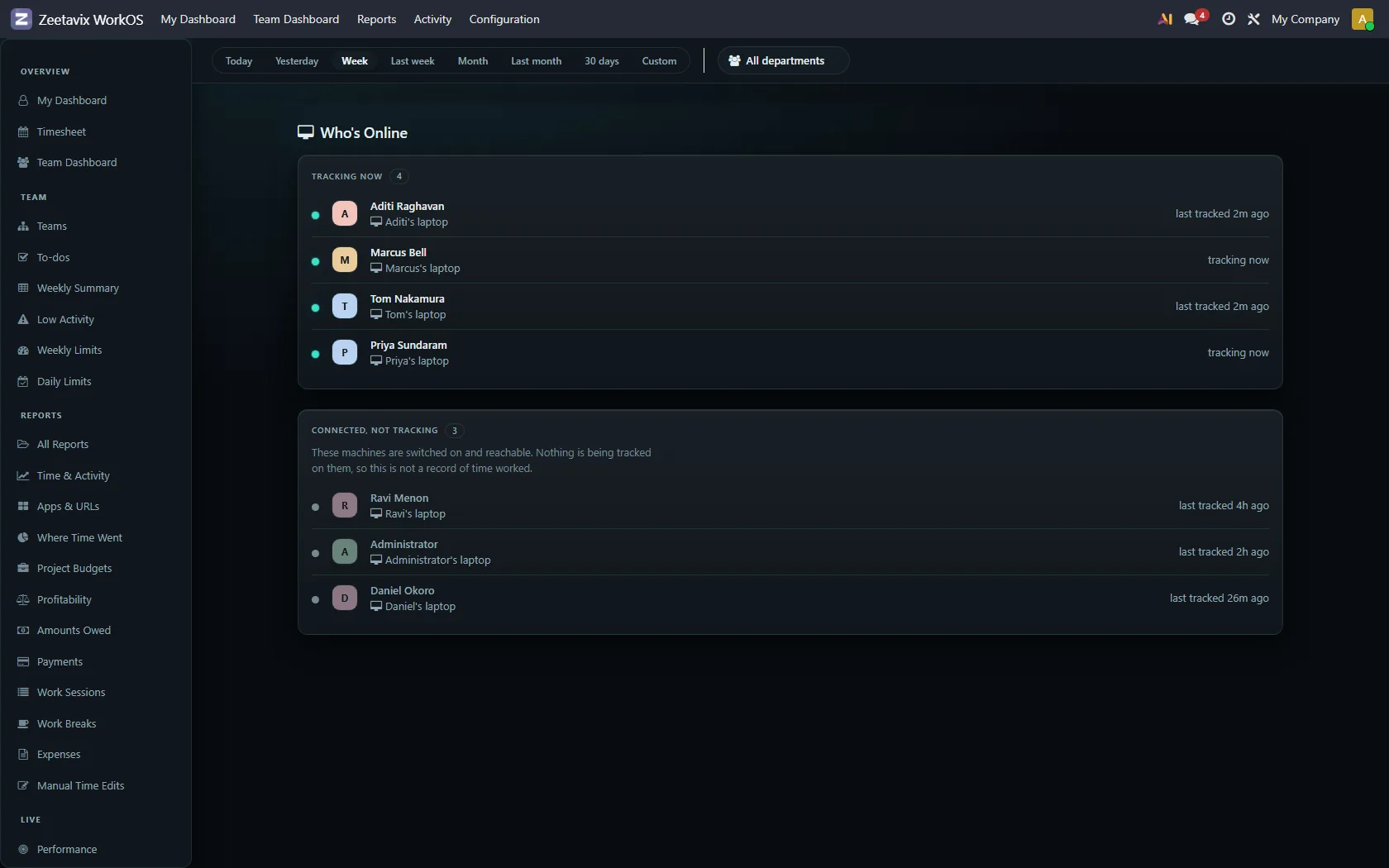
Who’s Online
Who has an agent reachable right now, and which of them have a timer running. They are counted separately for a reason: somebody at their desk who has not started the timer is a different conversation from somebody who is not there.